
email@email.com
On blurred priorities, what happens when everything is a top priority, and the choice that gets made when no one chooses.
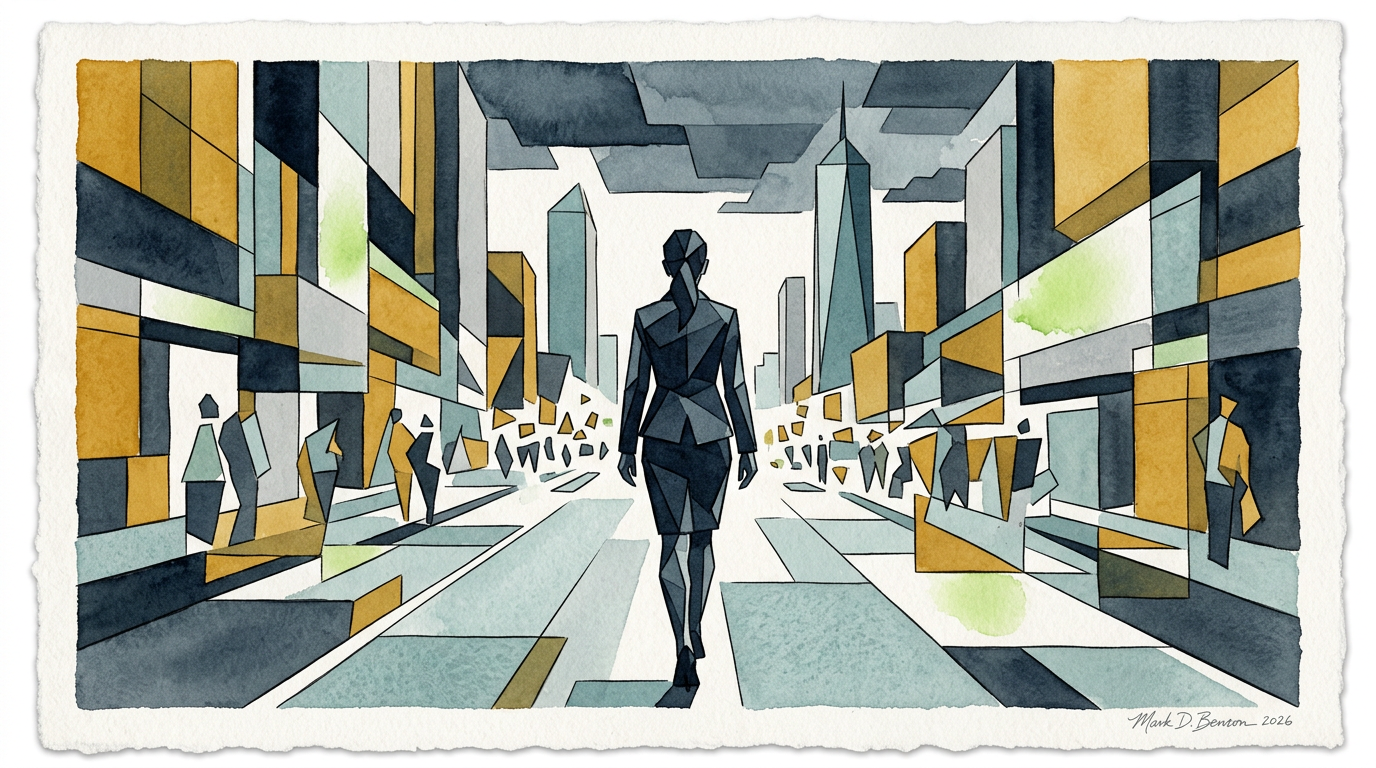
During a major market push, a leadership team named five “top priorities” at once. The five were owned by three different VPs reporting up through different leaders, and every one of them was genuinely important. The market was moving and all five mattered. Every team sprinted, and the work fragmented. When someone finally asked the room to rank the five, it went silent, because ranking meant one VP’s real, important initiative lost to another’s. So no one ranked them. But the work still got allocated, by who pushed hardest, by what was loudest, by what was easiest to staff. Months later, the teams were thinner and the deadlines had slipped. A strategy had been set, yet no one had chosen it.
The blur of urgency isn’t a sign of weakness, it’s a signal that there are some truly important things happening worth paying attention to. Most of the time, every item really does matter. That is what makes it hard. Under real change and real constraints, more matters than you can carry, and something has to give. When no one chooses what gives, the choice still gets made whether you like it or not. It just gets made by inertia, by volume, by whoever asks most often. Not choosing is its own choice and we tend not to notice we made it.
The answer isn’t “just decide,” and it isn’t one brave cut that settles everything for good. Two things can be true at once. The choice has to be made on purpose, about where the real resources go. And because things keep moving, that choice needs a date to revisit it, not a vague promise to stay flexible. Ranking is the easy part. Owning the call, and agreeing when to look at it again, is the harder one. There is a harder version still, the one a lot of us are actually in: the choice isn’t ours to make. The blur is coming from a decision no one above us has made, and we can’t rank our way out of someone else’s waiting.
When the call is yours, make it, and hold it loosely enough to adjust when you’re wrong. Decide where the resources go now, say plainly what slips, and set a time to look again. When the call isn’t yours, the work changes. It becomes making the cost of waiting visible to the person who can choose. Not “we have too much going on,” which is easy to wave off, but something they can act on: “these five need the same three people; here is what each one loses if we keep all five; tell us which matters most this quarter.” Either way, it is the same move. Trade the choice the constraint is making automatically for one made intentionally.
Mark D. Benson is the founder and principal writer of Resonant Vector™, the home of Pressure Intelligence™, and the host of Pressure Rising™. He is a senior executive, product and systems leader, and writer.
In his professional role, Mark leads SmartThings at Samsung, working at the intersection of strategy, technology, and large-scale human systems. His experience spans global teams, complex platforms, and environments where sustained pressure and high stakes are the norm.
Resonant Vector™ is an independent initiative, separate from his corporate role and not affiliated with Samsung or SmartThings. It reflects a personal commitment to learning in public, sharing practical insights, and contributing to healthier leadership practice over time.
More about Mark can be found at markdbenson.com.